
Fish Population Genetics


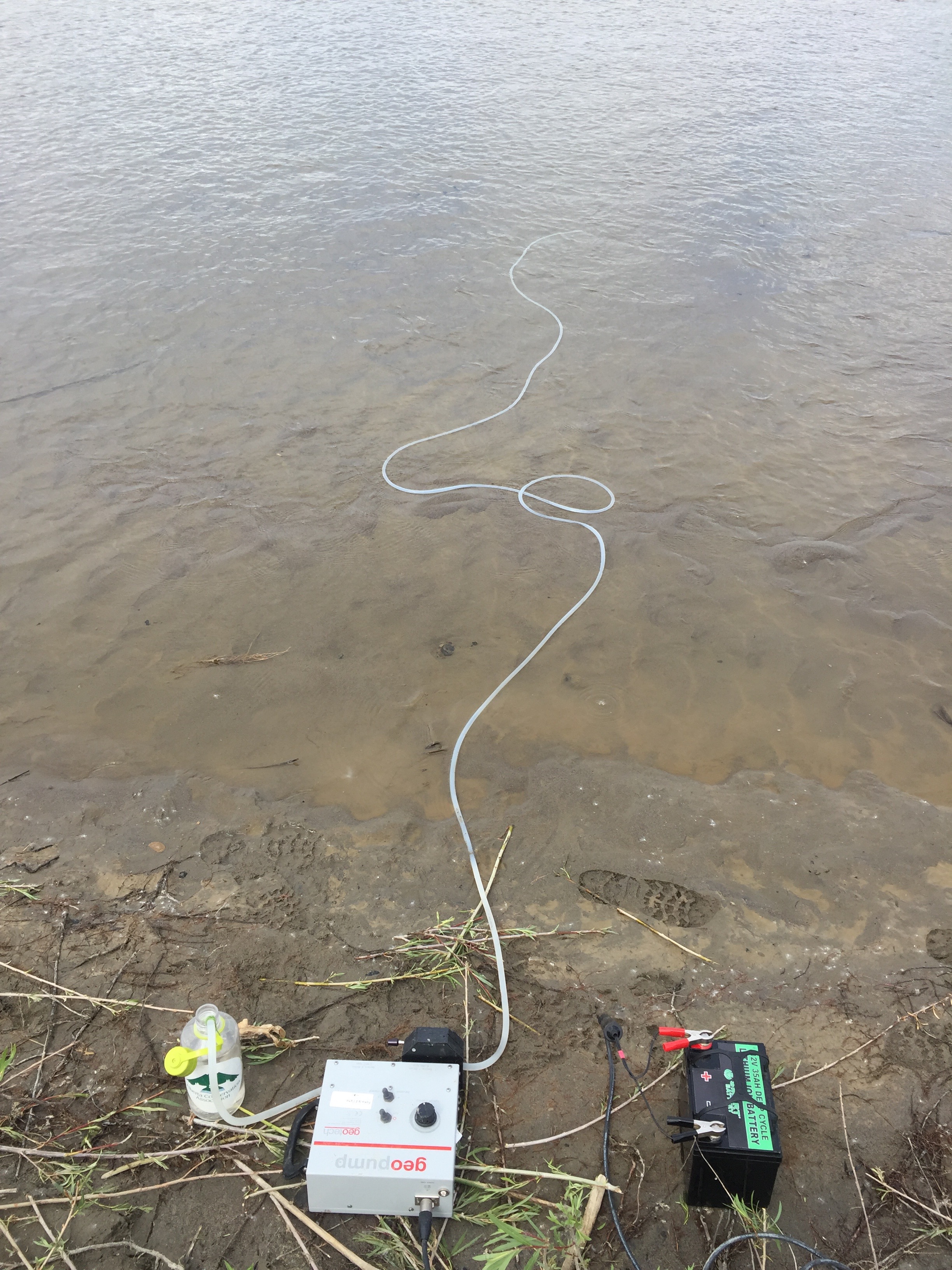
eDNA sampling



Articles from the Lab

Hambrook J., Kimmel N., Robinson R., Foster D., Poesch M.S. and P. Hanington. (2025) Development, validation and implementation of eDNA-focused qPCR assays to detect and distinguish between Goldfish (Carassius auratus) and Prussian Carp (Carassius gibelio). Environmental DNA 7(2): e70092.

Veilleux, H., McPherson, M.*, Cott, P., Poesch, M., S., Glover, C., and G. Goss. (2025) Environmental DNA as a tool to detect Arctic grayling and their habitat preferences in the Northwest Territories, Canada. Arctic Science 11: 1-12.

Nelson-Chorney, H.*, Carli, C.M., Davis, C.S., Vinebrooke, R.D., Poesch, M.S., and M.K. Taylor (2019) Environmental DNA in lake sediment reveals biogeography of native genetic diversity. Frontiers in Ecology and Evolution 17: 313-318.

Lamothe,K.A., Drake, D.A.R., Pitcher, T.E., Broome, J.E., Dextrase, A.J., Gillespie, A., Mandrak, N.E., Poesch, M.S., Reid, S.M. and N. Vachon. (2019) Reintroduction of fishes in Canada: a review of research progress for SARA-listed species. Environmental Reviews 27(4): 575-599.

Rudolfsen, T.*, Ruppert, J.W.R.*, Davis, C., Taylor, R., Watkinson, D. and M.S. Poesch (2019) Habitat use and hybridization between the Rocky Mountain Sculpin (Cottus sp.) and Slimy Sculpin (Cottus cognatus). Freshwater Biology 64(3): 391-404.