
Abstract:
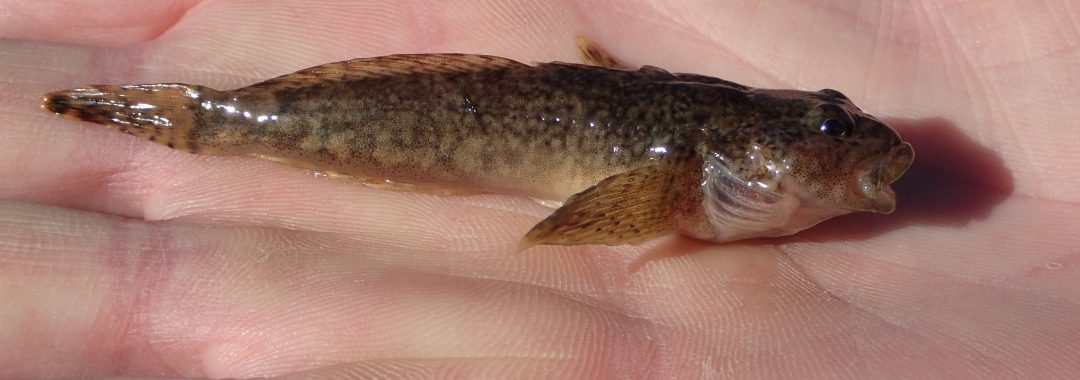
Freshwater fishes are amongst the most threatened group of animals. Changes in river flows are an important driver in this. To gauge the ability of a common freshwater fish to respond to altered flows, we examined how sculpins from rivers with different flow regimes behaviourally responded to increasing water speeds. We chose the imperiled Rocky Mountain Sculpin, since within their restricted geographic distribution, there are endemic subpopulations that inhabit rivers with high and low flow volumes, and an introduced subpopulation that inhabits a river with moderate flow volume. Sculpins were collected from these rivers, acclimated to laboratory conditions, and their swimming behaviour was observed in a three-chambered flume. Swimming activity did not differ between the subpopulations, but stream place preference did: sculpins from high flow volume preferred upstream, while sculpins from moderate flow volume preferred downstream, and sculpins from low flow volume were indifferent. An exploratory phenotype was present in each subpopulation. This study suggests that altered river flows may change upstream and downstream place preference, which in turn could affect species distributions and interactions.
Citation: Tierney K. B., Smith J., Veillard M., Steffler M. V. and M. S. Poesch. (2025). Subpopulations of an imperilled freshwater fish shows behavioral adaptation that informs survival in the Anthropocene. Canadian Journal of Fisheries and Aquatic Science 82:1-10.
Also Read:
*Lab members: Marie Veillard and Mark Poesch. Check out opportunities in the lab!